
*This is a sponsored article.
Your child snores through the night, wakes up cranky, and drags through the school morning. Or their mouth hangs open while they watch TV.
Sometimes that's allergies or a phase. Sometimes it's worth a closer look.
We asked Dr. Kevin Bibona, an orthodontist at Richmond Pediatric Dentistry & Orthodontics (RPDO), about the link between how kids breathe, how they sleep, and how their jaws grow. Here's what he wants Richmond parents to know.
 |
Dr. Kevin Bibona, an orthodontist at Richmond Pediatric Dentistry & Orthodontics, talks with a patient.
Quick take, if you're skimming
- Mouth breathing during a cold is normal. Mouth breathing most of the time, awake or asleep, is worth checking.
- Snoring, restless sleep, and tired mornings can be connected to how the upper jaw is developing.
- First orthodontic check by age 7. Most kids seen then don't need treatment yet, and no referral is needed.
- Pauses in breathing or gasping during sleep? Call your pediatrician first.
- Your child's dentist can help. Mention snoring or mouth breathing at the next checkup.
- Parents can be treated too. Some practices, including RPDO, treat parents and kids at the same offices.
What is airway orthodontics?
Regular orthodontics straightens teeth and fixes the bite. Airway orthodontics also looks at how the jaw, tongue position, and the width of the upper arch may affect breathing, especially during sleep.
The reason is anatomy. The roof of the mouth is also the floor of the nose, so a narrow upper jaw can mean less room to breathe through the nose.
My child breathes through their mouth a lot. Will they grow out of it?
Mouth breathing during a cold or an allergy flare is normal. A child who breathes through the mouth most of the time, awake or asleep, deserves a closer look.
That matters here. Richmond ranked 14th on the Asthma and Allergy Foundation of America's 2026 Allergy Capitals list, so plenty of local kids spend part of the year stuffed up. Managing allergies with your pediatrician is a good first step.
If the mouth breathing sticks around when your child isn't congested, there may be a structural piece too. A narrow upper jaw can lead to mouth breathing, and mouth breathing can keep the jaw from widening the way it should. Left alone, the two tend to feed each other.
Timing matters as well. In some kids, long-term mouth breathing has been linked to a longer, narrower face, a high palate, and crowded teeth. Jaws respond best to guidance while a child is still growing, and once growth slows in the mid-teens, those changes get much harder to make.
What signs should parents watch for?
At night
- Snoring, even soft or occasional
- Sleeping with the mouth open
- Restless sleep or frequent waking
- Teeth grinding
- Bedwetting past age 5
During the day
- Mouth open at rest, lips apart
- Dark circles even after a full night's sleep
- Trouble focusing at school
- Waking up tired
- A stuffy nose that never seems to clear
Most of these aren't urgent on their own. The pattern over weeks and months is what matters.
The exception is pauses in breathing, gasping, or choking during sleep. If you see that, call your pediatrician rather than waiting for an orthodontic visit.
 |
Dr. Kevin Bibona checks a patient's bite and jaw development.
My child has trouble focusing in school. Could sleep be part of it?
It's worth raising with your pediatrician. Research has found that children with sleep-disordered breathing, which includes chronic snoring, show more ADHD-like symptoms than kids who sleep well.
Not every child with attention struggles has a breathing problem. But if snoring, restless sleep, or mouth breathing are also in the picture, an orthodontic evaluation is a reasonable part of the conversation.
At what age should my child be evaluated?
The American Association of Orthodontists recommends a first orthodontic check by age 7, or sooner if you're seeing mouth breathing or poor sleep in a younger child.
An early visit doesn't mean treatment. Most 7-year-olds who get checked don't need anything yet, and a good practice will tell you that plainly.
You don't have to wait for an orthodontic visit to bring it up. Regular dental checkups are a good time to ask. At RPDO, the pediatric dentists watch jaw growth, the bite, and how the tongue moves at routine visits starting with a child's first tooth, and they check for tongue-tie, which can keep the tongue from resting where it should. When something needs a closer look, they bring in the practice's two orthodontists, Dr. Bibona and Dr. Payton Cook.
 |
RPDO's pediatric dentists start watching jaw growth and tongue movement from a child's first visits.
Will my child need an expander?
Not necessarily. Mouth breathing can come from enlarged tonsils or adenoids, allergies, ongoing congestion, or plain habit. An expander only makes sense when there's a clear structural reason, like a narrow upper jaw or a crossbite.
 |
A palatal expander widens the upper jaw gradually. It's only recommended when there's a clear structural reason.
When it is the right call, the expander widens the upper jaw gradually over a few months. The floor of the nose widens along with it, so breathing through the nose may get easier for some kids. Results vary, especially when allergies or tonsils are part of the picture.
One thing to be clear about: an expander is not a treatment for sleep apnea. Sleep apnea is a medical diagnosis, and it's handled by a physician.
I snore too. Can adults be treated?
Plenty of parents read that signs list and recognize themselves. The mouth breathing, the snoring, waking up tired every morning.
Adults can be treated. Adult bones have stopped growing, so the approach is different, but there are options: specialized expanders for adults, oral appliances that hold the jaw forward during sleep, or care coordinated with a sleep physician.
If you snore loudly or someone has noticed you stop breathing at night, talk with your doctor about a sleep study first. Orthodontic options work best alongside that, not in place of it.
For families, there's a practical upside. RPDO also offers adult orthodontics in Richmond, including braces and clear aligners, so a parent can be seen at the same office where their child gets orthodontic care.
 |
Parents can be seen at the same orthodontic offices as their kids.
How do I get started, and will insurance cover it?
A few things to do before the visit:
- Take a short phone video of your child sleeping, especially if they snore or breathe loudly. A minute or two is plenty.
- Jot down what you notice for a week or two: snoring, mouth open during the day, how they wake up.
- If allergies are part of the picture, work with your pediatrician on those too.
No referral is needed. The evaluation covers teeth, bite, and jaw growth, plus tongue position and the sleep concerns you've noticed at home. If the issue looks medical rather than structural, the next step is a referral to an ENT, allergist, or sleep physician, not treatment your child doesn't need.
 |
Dr. Payton Cook, one of RPDO's two orthodontists, during a patient visit.
At RPDO, orthodontic consultations are free. Coverage depends on your plan, and treatment for functional problems like a crossbite is often covered at least in part. RPDO also accepts Virginia Medicaid for orthodontic treatment, which can cover kids under 21 when it's approved in advance.
The bottom line
If your child snores, breathes through their mouth most of the time, or wakes up tired no matter how early they go to bed, it's worth a conversation. Catching it while they're still growing gives you the most options.
About the orthodontists
 |  |
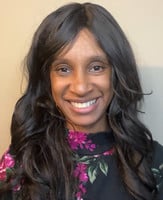
Dr. Kevin Bibona Dr. Payton Cook
Dr. Kevin Bibona is an orthodontist at Richmond Pediatric Dentistry & Orthodontics. He earned his DDS from the VCU School of Dentistry, is the immediate past president of the Richmond Dental Society, and was named a 2025 Virginia Living Top Dentist.
RPDO is a pediatric dentistry and orthodontics practice that has cared for Richmond-area families for over 100 years. Its pediatric dentists see kids from their first tooth in Short Pump, the West End, Mechanicsville, and Midlothian. Its two orthodontists, Dr. Bibona and Dr. Payton Cook, treat kids, teens, and adults in Short Pump, Mechanicsville, Midlothian, and on Patterson Avenue in Richmond. Dr. Cook is a Richmond native who earned her DDS at VCU and her orthodontic certificate at the University of Texas Health Science Center at Houston.